
Sema
Haroon Hayder Receives Master’s Degree from the University of Nebraska–Lincoln
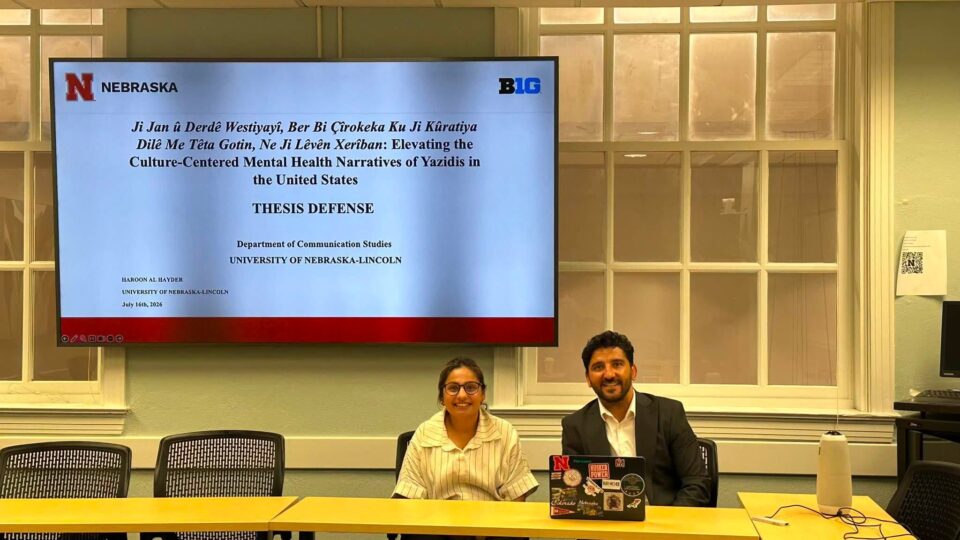
Ezidi researcher Haroon Hayder has earned a Master’s degree from the Department of Communication Studies at the University of Nebraska–Lincoln in the United States after successfully defending his thesis titled, “Elevating the Culture-Centered Mental Health Narratives of the Ezidis in the United States.”
The research examines the experiences of Ezidi survivors of the 2014 genocide who have resettled in the United States, contributing an in-depth academic study on the long-term psychological effects of genocide and the complex mental health challenges facing the community.
Lasting Trauma and Resettlement Challenges
In his thesis, Hayder explains that the 2014 Ezidi genocide inflicted profound trauma that extended beyond individuals to affect the community’s collective identity, memory, and culture. He notes that although many survivors have found safety in the United States, they continue to face ongoing psychological challenges compounded by structural barriers in the resettlement process, difficulties adapting to a new society, and the complexities of the U.S. healthcare system.
A Culture-Centered Research Approach
Hayder based his study on the Culture-Centered Approach (CCA), aiming to create an academic space where members of the Ezidi community could define and share their own narratives of mental health, trauma, and healing rather than having their experiences interpreted by outside perspectives.
Reflecting on the achievement, Hayder said:
“I was honored to create a space for members of my community to share their narratives, and I’m grateful to amplify survivor voices within an academic space that has historically marginalized and misrepresented them.”
Looking Ahead
Hayder expressed his gratitude to the survivors who participated in the research, as well as to his family and academic advisors for their unwavering support throughout the project.
He emphasized that this milestone marks only the beginning of his academic journey, revealing that he will continue expanding this research as part of his PhD dissertation this fall, building on the foundation of his master’s work to further advance research that serves the Ezidi community.