
Sema
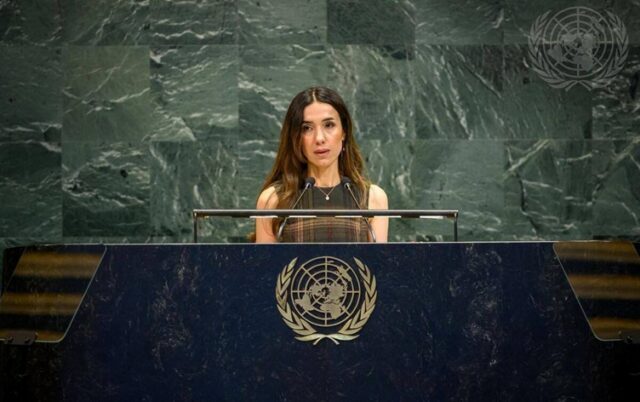
Nadia Murad, UN Goodwill Ambassador and Nobel Peace Prize laureate, said that women and girls in Iraq “still face discrimination, violence, and lack of opportunities.”
She made the remarks on Monday (September 22, 2025), on the sidelines of the UN General Assembly meetings in New York, marking the 30th anniversary of the Fourth World Conference on Women.
Murad stated: “We renewed the call to turn promises into concrete actions for all women and girls, including women and girls in Iraq.”
She added that “millions of women and girls around the world are still deprived of education, exposed to sexual violence, or forced into early marriage.”
In 2024, the United Nations pointed out that “violence against women and girls remains a serious global issue and a major challenge in Iraq, especially for displaced women and survivors of violence.”
A UN statement noted that “although Iraq has made progress through policy reforms and awareness campaigns, societal and systemic barriers remain a significant challenge, highlighting the need to maintain momentum to ensure sustainable progress.”
Referring to the fate of kidnapped Ezidi women, Murad said: “The missing Ezidi women and girls—including members of my own family—remain unaccounted for, while the world often continues to prioritize the families of ISIS fighters over the victims, hindering justice and prolonging their suffering.”
Last August, Dindar Zebari, Coordinator of International Advocacy in the Kurdistan Regional Government, stated that so far (3,590) Kurdish Ezidis have been rescued, while the fate of (2,827) others is still unknown.
Kurdistan Region President Nechirvan Barzani has called on Iraq to take greater responsibility for the concerns of Kurdish Ezidi citizens “far more than it currently does,” while reaffirming his ongoing efforts to free the remaining captives and establish Sinjar as a province.
It should be noted that ISIS seized large areas of Syria and Iraq in 2014. On August 3 of that year, the group launched a bloody attack on Sinjar and its surroundings, committing mass killings of Kurdish Ezidi men and boys, and abducting women and children.