
Sema
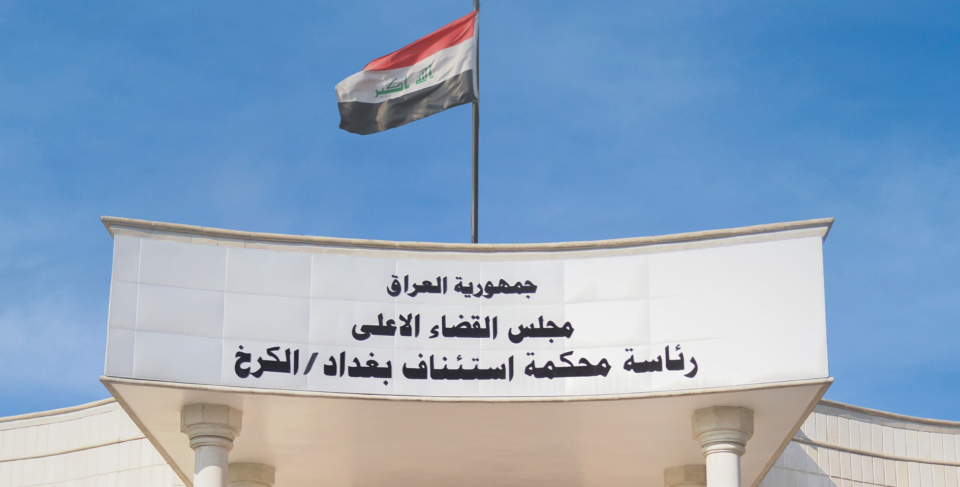
The Media Center of Iraq’s Supreme Judicial Council has announced that the First Karkh Investigation Court has completed the interrogation phase in the cases of 5,704 suspected ISIS members transferred from northeastern Syria to Iraq. The cases will now move to the next judicial stage, with suspects to be referred to trial courts based on the evidence and facts established in each individual case.
The development marks a major step in one of the largest judicial and investigative files involving ISIS. The Iraqi judiciary has handled the cases as an integrated judicial file under its jurisdiction, under the direct supervision of Supreme Judicial Council President Judge Dr. Faiq Zidan. The First Karkh Investigation Court, which specializes in terrorism cases, was tasked with handling the file, with the participation of judges, public prosecutors, judicial investigators and law-enforcement forces.
Initial investigations began in February 2026 and continued through interrogations, evidence collection and verification, culminating in the completion of investigations involving all 5,704 suspects, paving the way for their cases to be resolved in accordance with legal procedures.
The review showed that the file includes individuals from 67 nationalities, including 16 Arab nationalities, 19 nationalities from European Union countries and 32 other foreign nationalities. There are also 474 Iraqis and 3,497 Syrians among those involved, highlighting the international nature of the case and the complexity of the facts, evidence and movements of the individuals concerned.
Investigations, evidence gathering and analysis identified several highly dangerous individuals who held leadership, security, religious, military, media or other key positions within ISIS, or who were involved in specialized operations and crimes with an international dimension. The investigations also revealed the organization’s wide range of roles, extending beyond combat activities to military, security, financial, logistical, administrative, medical, technical and media operations.
The National Center for International Judicial Cooperation played a role in documenting and organizing information gathered during the investigations, linking it to databases and transforming scattered information into data suitable for analysis and comparison. It also supervised the Intelligence Analysis Center, which includes judicial investigators and specialists from Iraq’s Ministry of Interior, National Intelligence Service, National Security Service and Military Intelligence Directorate. The joint center works to verify suspects’ data, link information and evidence, and provide judicial and investigative authorities with supporting documents and technical reports.
As part of the documentation of forensic evidence, the Ministry of Interior’s Directorate of Criminal Evidence recorded the biometric data of detainees, including fingerprints, iris scans, DNA samples and palm prints.
Regarding the management of detainees, the Ministry of Justice, through Karkh Central Prison, was responsible for implementing judicial decisions and orders concerning their detention, ensuring that they were held in accordance with applicable legal frameworks and providing the necessary services, healthcare and humanitarian requirements.
The investigations also uncovered information related to serious crimes with an international dimension committed against the Ezidi community. Six suspects were identified whose case files contained roles directly connected to the enslavement of Ezidis, including the detention, transportation, sale, supervision or benefiting from the system of slavery established by ISIS.
The judiciary established a separate procedure for dealing with juveniles, including age assessment by a specialized team from the Forensic Medicine Department, the involvement of specialized investigating officers, and assessments of their social and psychological circumstances by the Personal Studies Office.
The investigations also resulted in the release of detainees in cases where sufficient evidence was not established. This included a Finnish detainee who was released and handed over to Finnish authorities, an American detainee who was handed over to U.S. authorities, and seven Iraqi detainees who were released.
At the same time, procedures are being completed for the release of 457 Syrian detainees against whom no evidence was established warranting continued judicial proceedings. They are expected to be handed over to the Syrian side after the necessary legal and judicial requirements are completed. Coordination has been carried out with the Syrian Embassy in Baghdad through the official diplomatic channels of Iraq’s Ministry of Foreign Affairs to organize their transfer to Syria.
The investigations were accompanied by legal and humanitarian safeguards. A lawyer was appointed for each suspect in coordination with the Iraqi Bar Association, while medical examinations and healthcare were provided by Iraqi Ministry of Health personnel. The International Committee of the Red Cross also conducted regular visits to detainees, who were allowed to communicate with their families in accordance with legal and security regulations.
As part of efforts to monitor the situation of foreign nationals, diplomatic and consular missions from several countries were allowed to visit their nationals. The visits were coordinated with the National Center for International Judicial Cooperation and relevant Iraqi authorities in accordance with established legal and diplomatic procedures.
With the transition to the trial phase, a courtroom equipped for remote hearings through a closed-circuit television system and direct video connection has been prepared. This will allow high-security detainees to participate in criminal court sessions while reducing the risks associated with transporting them.
The cases fall under Iraqi jurisdiction and applicable national legislation, particularly the Counter-Terrorism Law No. 13 of 2005, the amended Penal Code No. 111 of 1969, and the amended Code of Criminal Procedure No. 23 of 1971, in addition to legislation concerning juveniles and the protection of witnesses and victims.
The Supreme Judicial Council said that completing the interrogation and investigation of all 5,704 suspects marks the end of the investigative phase and the beginning of the trial process. Suspects will be referred to the competent courts in batches, with each case examined and adjudicated based on the evidence and facts specific to the individual suspect, without applying the outcome of one case to another.
The council also stressed that the file has been managed by Iraqi personnel through a system linking judicial investigations with evidence collection, analysis, documentation and databases. Given the international nature of the file and the diversity of nationalities involved, continued judicial cooperation with concerned countries remains necessary, while the international community must fulfill its responsibilities in completing procedures related to the cases, supporting justice, protecting victims’ rights and strengthening the principle of accountability.