Sema
A recent report by the Kurdistan Regional Government (KRG) highlights the Kurdistan Region’s leading role in promoting coexistence and political partnership among eight officially recognized religious communities and various ethnic groups. The report notes that these communities are represented in parliament and government institutions, including ministerial positions in the ninth cabinet.
According to the report, the Kurdistan Region is home to more than 6,500 mosques, churches, monasteries, shrines, and sacred sites. It also provides educational opportunities tailored to minority communities, including Turkmen, Syriac, and Ezidi students.
Minority Participation in Government
Religious and ethnic communities have participated in Kurdistan Region governments since the first cabinet. In the current ninth cabinet, members of minority communities hold two ministerial posts.
Education for Minority Communities
- Turkmen Education: 19 schools, 1,995 students, and 285 teachers and staff.
- Syriac Education: 50 schools, 6,690 students, and 634 teachers and staff.
- Ezidi Education: 24,369 Ezidi students receive education in Kurdish-language schools.
Religious Sites Across the Region
The Kurdistan Region includes:
- 6,224 mosques
- 273 churches, monasteries, and Christian shrines
- 325 Ezidi and other minority religious sites, including:
- 183 shrines
- 142 sacred sites (Nishangah)
Cultural and Linguistic Rights
Citizens from all communities enjoy the right to education, cultural preservation, and the use of their mother tongues. They also actively participate in governance and public administration throughout the region.
The KRG places special emphasis on protecting the rights and cultural heritage of minority communities, ensuring their representation in state institutions, organizations, and community-specific bodies.
Institutions Supporting Religious Coexistence
The Ministry of Endowments and Religious Affairs oversees the Directorate of Religious Coexistence in the Kurdistan Region, which includes representatives of Christianity, the Ezidi faith, the Bahá’í Faith, Mandaeanism, Kaka’i, Zoroastrianism, and Judaism.
The ministry also includes the General Directorate of Christian Affairs and the General Directorate of Ezidi Affairs, which supervise places of worship and holy sites, support local religious administrations, and organize religious ceremonies and events.
Religious and Ethnic Diversity
Under Article 125 of the Iraqi Constitution and Kurdistan Region Law No. 5 of 2015, recognized components include the ethnic groups of Turkmen, Chaldeans, Syriacs, Assyrians, and Armenians, as well as religious communities including Christians, Ezidis, Mandaeans, Kaka’is, Shabak, Feyli Kurds, Zoroastrians, and others.
The ninth KRG cabinet program reaffirms its commitment to strengthening peaceful coexistence among Kurds, Turkmen, Chaldeans, Assyrians, Syriacs, Armenians, Arabs, Muslims, Ezidis, Christians, Kaka’is, Mandaeans, and Zoroastrians, while protecting the region’s unique diversity.
The Ezidi Faith
The Ezidi faith is one of the oldest indigenous religions of Kurdistan. The majority of Ezidis live within the administrative boundaries of Duhok Province and the Kurdish areas of Nineveh Province. Their population is estimated at between 500,000 and 700,000 people.
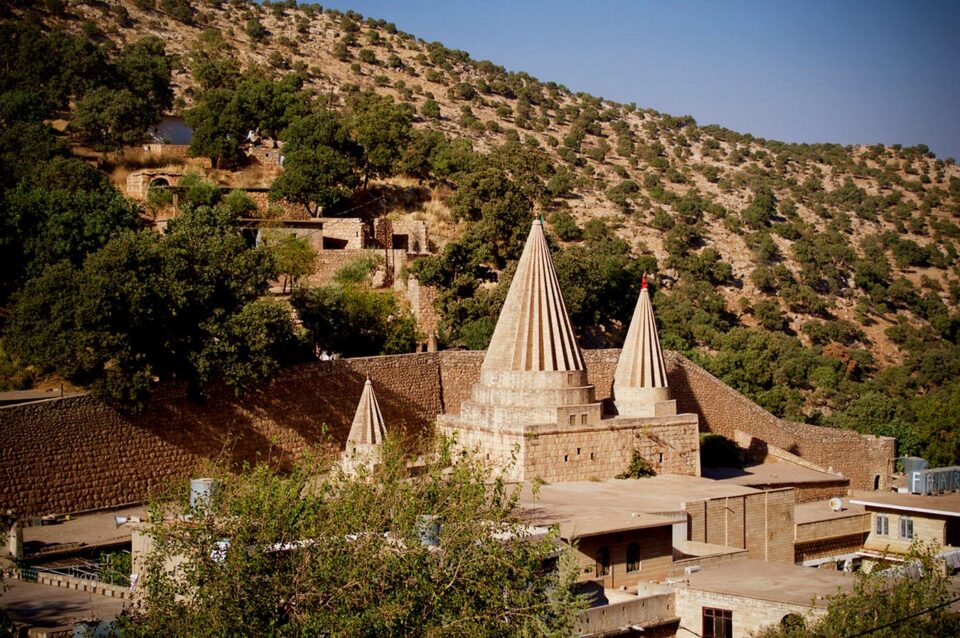
The Kurdistan Region and the Kurdish areas of Nineveh are home to hundreds of Ezidi sacred sites, many of which have been built or restored since 2003.
Every year, approximately 200,000 pilgrims from around the world visit the sacred temple of Lalish Temple, with the largest gatherings taking place during the seven-day Jama Festival, the most important annual religious event in the Ezidi calendar.