
Sema
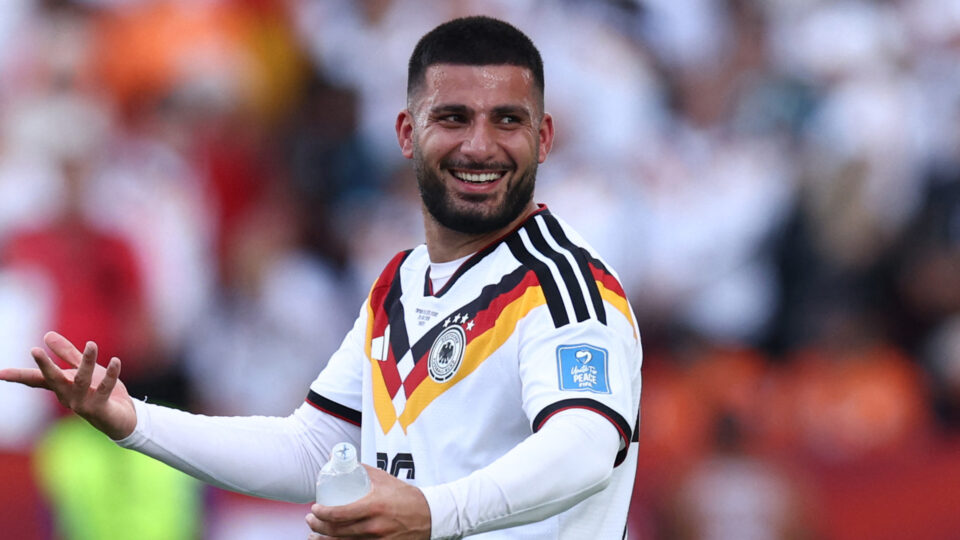
Deniz Undav’s World Cup journey is evolving into a landmark moment for Kurds worldwide. His decisive late-game impact against Ivory Coast secured Germany’s place in the knockout stage, further establishing him as one of the tournament’s breakout stars and an inspiring figure for Kurdish communities across the globe.
Tension was steadily rising inside Toronto’s BMO Field on Saturday as the match entered its decisive stages. Memories of Germany’s disappointing recent World Cup campaigns seemed to be creeping back into the minds of supporters and players alike.
Down 1–0 against a determined and physically strong Ivory Coast side after Franck Kessie’s close-range finish in the 30th minute, the four-time world champions suddenly appeared short of ideas.
Germany’s midfield, normally known for dictating the rhythm of play, found it difficult to break through an organized and disciplined Ivorian defense.
With pressure mounting and momentum slipping away, Julian Nagelsmann made a decisive move in the 60th minute — turning to his bench and calling upon Deniz Undav.
Over the next 30 minutes, the Kurdish-German forward did far more than change Germany’s fortunes — he delivered a performance that further cemented his rapid rise on football’s biggest stage.
The impact was immediate.
Undav brought a new level of energy, directness, and attacking intent to Germany’s play, transforming the rhythm of the match in the final third. As the pressure mounted, he seized his moment midway through the second half, firing home a superb volley that broke through Ivory Coast’s resistance and brought Germany back into the contest.
Yet his influence was only beginning.
As stoppage time unfolded and the possibility of a tense final group-stage battle loomed, Undav produced one more decisive moment. Deep into injury time, he struck again, completing a dramatic comeback and securing a thrilling 2–1 victory for Germany.
According to reporting by Agence France-Presse journalist Rob Woollard, the hard-earned victory officially secured Germany’s place in the knockout rounds, marking the nation’s first progression beyond the group stage since lifting the World Cup trophy in 2014.
With his decisive two-goal display, Undav further strengthened his growing reputation as Germany’s ultimate game-changer off the bench. Emerging as one of the tournament’s standout stories, the Kurdish-German forward is quickly becoming an essential figure in Julian Nagelsmann’s plans as Germany intensifies its pursuit of a fifth world title.
From crowded cafés in Erbil to Kurdish communities spread across Europe and beyond, his performances resonate with a meaning that goes deeper than football itself.
For millions of Kurds across the Kurdistan Region, Syria, Türkiye, Iran, Iraq, and the global diaspora, Undav has emerged as more than just a football star. He has become a powerful symbol of representation, pride, and visibility on one of the world’s biggest sporting stages.
That powerful connection with Kurdish communities had already been strengthened only days earlier during Germany’s commanding seven-goal victory over Curaçao.
As previously reported by Kurdistan24, the group-stage match saw Undav make history as the first player of Kurdish heritage to score in a FIFA World Cup.
Read More: When Germany Scored, the ‘Govend’ Began: Kurdish Celebration Lights Up World Cup Victory Over Curaçao
To mark the historic achievement, Undav celebrated by performing a traditional Kurdish govend dance near the corner flag.
The gesture was far more than a personal celebration. It quickly resonated with Kurdish communities around the world, turning what might have been viewed as a routine World Cup result into a moment of deep cultural significance and collective pride.
Against Ivory Coast, Undav demonstrated that his earlier breakthrough was no one-time moment. Instead, he showed that his growing influence on Germany’s World Cup campaign is becoming impossible to ignore.
His match-winning display against Ivory Coast only intensified the momentum first sparked during Germany’s clash with Curaçao, reinforcing the sense of pride already felt among Kurdish communities across the world.
For a people without an independent FIFA-recognized national team, seeing a player of Kurdish heritage emerge as a key figure for one of football’s traditional superpowers carries unique emotional significance. It offers a rare and powerful moment of visibility on the sport’s grandest stage.
Undav’s rise also reflects the increasingly important relationship between sport, identity, and representation. Like many athletes from diaspora communities, he balances multiple identities, competing at the highest level of European football while maintaining a visible connection to his cultural roots.
As highlighted in previous Kurdistan24 reporting, Undav represents a wider wave of growing Kurdish visibility within international football. Across different national teams and leagues, a new generation of players is reshaping conversations around identity and belonging through sport.
For many young Kurds watching around the world, these moments hold meaning beyond the game itself. Seeing their heritage embraced on the biggest stages validates stories and experiences that often exist across multiple cultures and borders.
It delivers a powerful message: Kurdish identity has a place in the global spotlight.
Undav has become more than a footballer. He has emerged as a symbol of perseverance and pride, demonstrating that athletes can honor their heritage while thriving in one of the world’s most competitive arenas.
As Germany now turns its attention toward the knockout rounds, questions will naturally grow around whether Julian Nagelsmann should reward Undav with a place in the starting lineup. His clinical finishing and decisive impact make a compelling argument.
But regardless of the tactical decisions ahead, one thing already appears certain: Undav’s legacy at this World Cup extends beyond goals and victories.
He is both the game-changing figure helping keep Germany’s title ambitions alive and a cultural trailblazer reminding millions that identity, representation, and football can intersect in extraordinary ways.